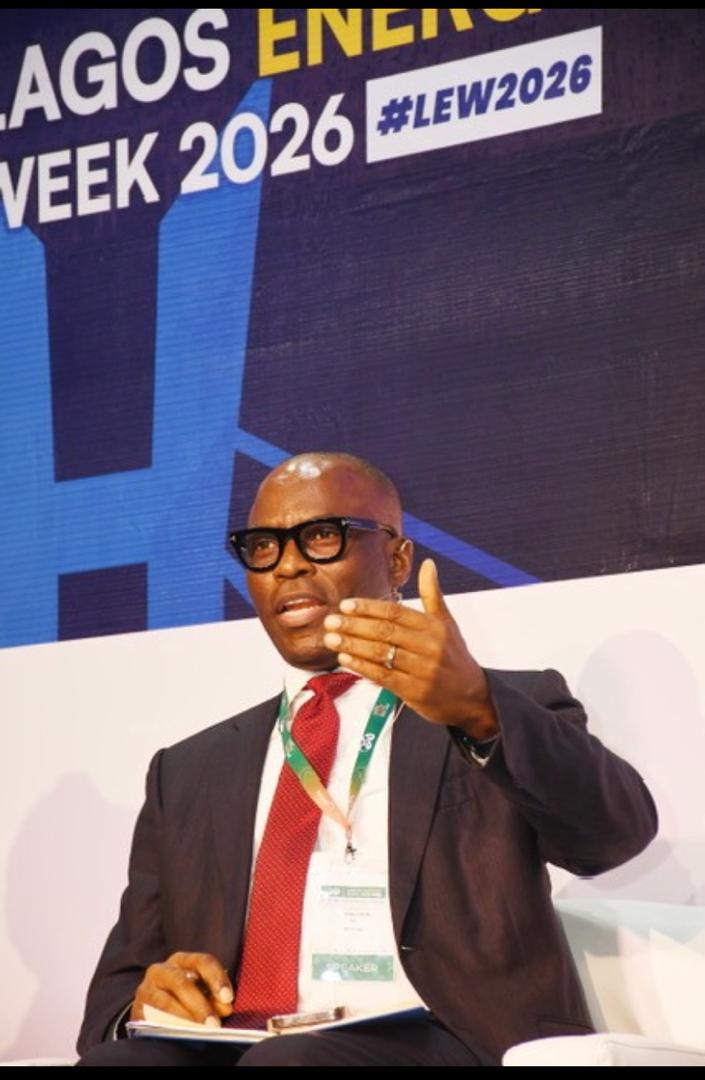
The Managing Director of ANOH Gas Processing Company Limited (AGPC), Effiong Okon, has explained how strategic partnerships, strong commercial structures, and regulatory alignment enabled the successful delivery of First Gas from the ANOH project, despite years of technical and commercial hurdles.
Speaking at the just concluded Society of Petroleum Engineers Lagos Section Energy Week in Lagos, Okon described the milestone as a signal that Nigeria is entering a new phase of gas sector maturity.
“What this project demonstrates very clearly is that when the right commercial structures, partnerships, and regulatory alignment are in place, large-scale gas developments can transition efficiently from concept to operation,” he said.
According to him, the ANOH experience highlights both the enormous opportunities and significant complexities associated with scaling gas production in Nigeria, given the country’s vast reserves and the growing global acceptance of natural gas as a lower-carbon transition fuel compared to coal, crude oil, and biomass.

Okon disclosed that the company’s shareholders — NNPC Limited and Seplat Energy Plc — successfully mobilised a robust financing structure for the project, comprising $420 million in equity, a $40 million shareholder loan, $320 million debt from a consortium of seven banks, and a $30 million condensate prepayment facility.

“This clearly shows that investors are interested in well-governed gas projects in Nigeria and are willing to back them,” he noted.
On the technical front, Okon said ANOH currently delivers between 40 and 80 million standard cubic feet per day (MMscfd) of processed gas to Indorama Eleme Petrochemicals, alongside condensate production of about 2,000 to 6,000 barrels per day, with plans to ramp up to the plant’s full 300 MMscfd nameplate capacity.
From a regulatory standpoint, he credited the landmark approval by the Nigerian Midstream and Downstream Petroleum Regulatory Authority (NMDPRA) for enabling smooth commissioning and commencement of gas flow on January 16, 2026, describing it as evidence that reforms in midstream permitting are beginning to yield results.
He also pointed to renewed construction momentum on the critical OB3 Gas Pipeline as a positive signal for long-term domestic gas evacuation capacity, despite earlier delays.
However, Okon acknowledged that the journey to First Gas was far from smooth. Six years after Final Investment Decision (FID), the project reached completion in late October 2025, but export routes were not immediately ready due to the OB3 pipeline delay, now expected in the second quarter of 2026.
An interim arrangement to supply gas to Nigeria LNG Limited also encountered commercial bottlenecks between operators, despite significant investments in infrastructure modifications to enable delivery through that route.
He emphasised that scaling gas production remains a complex “molecules-to-electrons” journey, dependent on demand growth, government policies, fiscal frameworks, pricing structures, and adequate infrastructure across processing, transportation, and distribution value chains.
ALSO READ:
- Harvard Energy Conference Rallies Experts For Nigeria’s Economic Transformation
- All On invests in PowerGen to close electricity access gap in Nigeria
- NEPCL Powers Lekki Police Division with 12KVA Solar System
- ENERGY TIMES 2026 Awards: Nominations Close September 20 as Entries Hit 122
- NUPRC Warns Flare Gas Awardees Over Permit Revocation
On the positive side, Okon noted increasing gas-based investments in Imo State across power generation, industrial development, agro-processing, and industrial parks, supported by the administration of Hope Uzodimma through initiatives such as the Orashi Energy Free Trade Zone and the state’s economic summit.
At the national level, he identified major sector unlocks including infrastructure expansion by the Nigerian Gas Infrastructure Company (NGIC) through projects such as the AKK and OB3 pipelines, initiatives by NGML, Presidential Executive Orders, and attractive fiscal incentives under the Petroleum Industry Act (PIA).
He added that strategic advisory work supporting Nigeria’s Decade of Gas programme has further sharpened sector priorities amid rising population and energy demand.
From a funding perspective, Okon concluded that the ANOH project has clearly demonstrated strong investor confidence in Nigeria’s gas sector when governance, policy, and commercial fundamentals are aligned.