


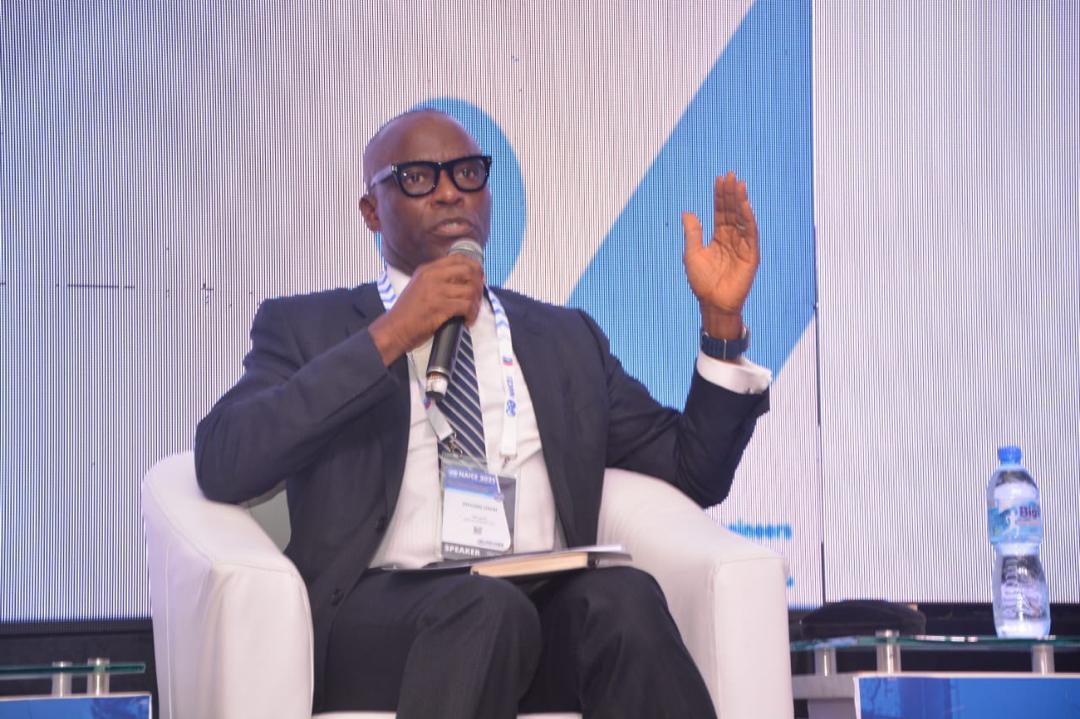
Managing Director of ANOH Gas Processing Company, Engr. Effiong Okon, has explained why the International Oil Companies are not willing to invest in the Nigeria’s power industries, emphasizing that Nigerians weren’t paying for power.
Okon who was among the distinguished panelists that spoke at the 2025 Nigeria Oil & Gas Outlook held in Lagos, said: “The IOCs were never really interested in national interest. Look at gas-to-power, Nigerians weren’t paying for power, so why would they invest? Now Nigerians are beginning to believe in Nigeria. We’re taking our destiny into our own hands.”

He cited recent growth in midstream projects, including LPG deliveries directly into the domestic market and new FLNG initiatives.
“The potential is massive. Nigeria has about 600 TCF of undiscovered gas in addition to the 209 Tcf of discovered gas. We are just scratching the surface of this huge resource base, resource that has transformed other economies like the US, Qatar, Australia, and Russia, where investment in gas has transformed their economy. It is cleaner than oil, making it a good choice for sustainability/ESG. From my experience as a reservoir engineer, this terrain is more gas-prone than oil-prone. With our people still in energy poverty, there’s no better time than now”.
With the theme: “Exits, Divestments, and the Rise of Indigenous Players in Nigeria’s Oil and Gas”, Okon addressed issues around financial and infrastructural challenges in midstream gas development, the implications of International Oil Companies’ divestments, and the strategic shifts required for Nigeria’s indigenous companies to succeed.
Okon who was was emphatic about what he sees as the foundation of success in oil and gas: people, stressed that while IoC’s invested heavily in talent development, indigenous companies often focus only on cash returns, with very few taking the issue of people investment seriously
He said: “It’s about people. People are your greatest asset. If you have the right people, they can put the right financial solutions in place and the right technical solutions too. Most indigenous companies don’t spend on people. They don’t invest in people. For them, it’s about the cash. The challenge is, they raised funding as debt or equity to acquire the assets, so it is obvious that this comes with enormous financial challenge and no business strives without financial robustness. But my biggest concern is that the wave of talent that was developed by the IoC’s over the last 50 years is aging and fading out fast as these IOCs rationalize their global portfolios with some divesting from certain jurisdiction resulting is loss of traction on recruitment, talent identification and development.
For Okon, the future depends on deliberate investment in human capital: building, training, and nurturing the next generation of professionals who will drive Nigeria’s oil and gas growth.
“This an area the indigenous, independents, marginal field operators, service companies and National Oil Company need to do more deliberately”, he said.
When asked about the unique hurdles in financing and developing large-scale gas processing plants, Okon drew from his experience leading theAssa North Gas Project in Imo State.
He said: “This is really about finance and infrastructure. When the IOC’s came to Nigeria, they built end-to-end systems—Shell in East and West with Export Terminals in Bonny and Forcados, Chevron in Escravos, Total in their own hub. But today, most of that integrated infrastructure is now broken into different segments and sold separately during the asset’s divestment, except for the recent SPDC sale to RAEC, ExxonMobil shallow water business sold to Seplat and Eni business sold to Oando Energy Resources, where some degree of the integrated infrastructure was preserved.So, when you buy in, you inherit all the complexities.”
He recalled the difficulty his project faced with the delayed OB3 pipeline:
“Imagine putting almost $850 million into the ground, and then your export route isn’t ready. It is painful, very hard from a finance point of view. The banks are calling, restructuring repayments; you can’t just sit idle. We had to quickly develop an alternative through NLNG, partnering with Oando Resources. That saved the early monetization phase of the investment.”
Okon explained that without control of infrastructure, projects remain vulnerable. “Your business is only as strong as its weakest link,” he said, emphasizing collaboration and leveraging existing assets as critical strategies.
ALSO READ:
- Falcon Corporation Secures ‘A’ Long-Term, ‘A1’ Short-Term Credit Ratings from Agusto & Co. with Stable Outlook
- Vsolaris, REA Partner to accelerate Minigrid Electrification across Nigeria
- SNEPCo shuts down Bonga for two months Turnaround Maintenance
- NUPRC Prioritises Technical, Financial Capacity in Licensing Round Guidelines
- SEEPCO’s donor club tackles blood shortages to save lives
On financing, he recounted how ANOH raised nearly $780 million through a mix of equity from NNPCL and Seplat Energy PLC, alongside syndicated debt from seven banks. He also flagged currency risks as constant pressure
“In the midstream gas business, the agreements contracts are normally in dollars, but payments often come in naira for gas sales into the domestic market. Lenders don’t want naira due to volatility. That’s why condensates are so important, they provide dollar
When asked whether financial, technical, or operational capacity was most essential, Okon reframed the debate.
“It’s hard to pick just one. For me, it’s about long-term excellence. Oil and gas is a long-term business, it takes about 3 to seven years before you even begin recovering investments. The typical Nigerian businessman wants money today and returns tomorrow. That’s why many fail. What we need is patience, discipline, and excellence in all areas (operational, technical, financial, regulatory, governance, functional, etc.) over the long term.”
He stressed that long-term excellence requires competent boards, strong management, and strategic discipline. “You can’t just raise finance and buy private jets when the funds are meant to execute annual work programme and budgets to deliver value to all stakeholders,” he warned. “Excellence means become the best at delivering on cost, value, and sustainability—consistently.”


