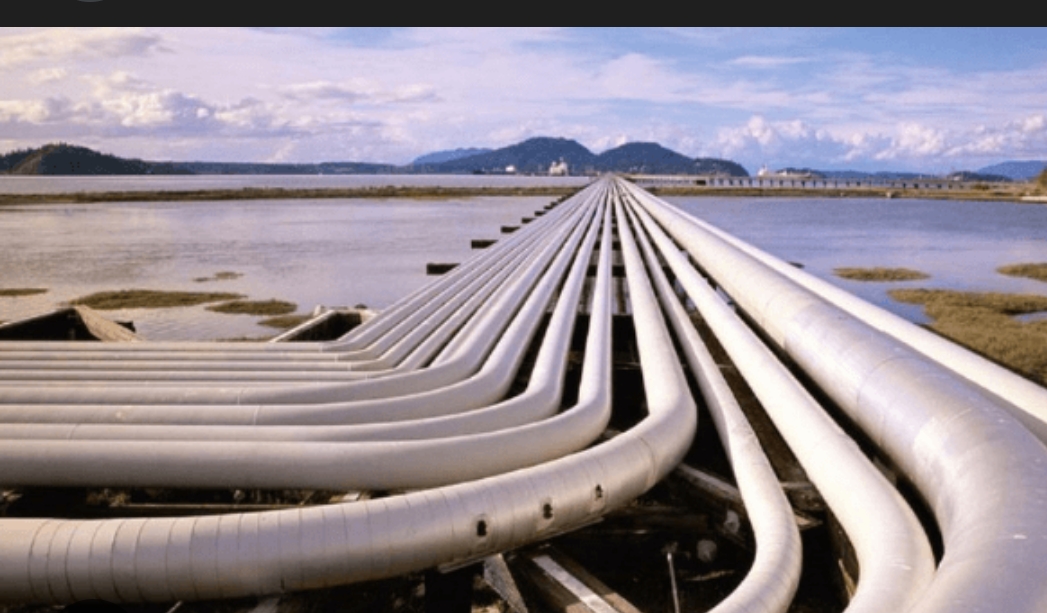

The Amukpe–Escravos Pipeline (AEP), one of Nigeria’s most critical crude evacuation assets, has increasingly become the centre of a complex dispute driven by conflicting claims, transaction ambiguities, and lingering questions around ownership clarity.
At a time when Nigeria is working to strengthen investor confidence and governance credibility in its oil and gas sector, the situation surrounding the 20-inch, 67-kilometre Amukpe–Escravos Pipeline underscores the importance of clearly defined ownership of strategic infrastructure assets that carry significant national value.
At the core of the issue is a fundamental fact: the AEP is owned by two parties — NNPC Exploration & Production Limited (NEPL), which holds a 60 percent stake, and Pan Ocean Oil Corporation Nigeria Limited, which owns the remaining 40 percent. This ownership structure reflects a long-standing joint venture framework that underpinned the pipeline’s development, financing, and operations.
Despite this clear ownership structure on paper, multiple claims and transaction pathways have emerged over time, creating uncertainty about legitimate rights and interests in the asset. What initially began as a debt recovery process linked to Pan Ocean’s financial obligations has gradually evolved into a broader dispute over transactional interpretations and ownership expectations.
ALSO READ:l
- Shell sells Nigeria domestic gas business to Vaaris Energy
- President Tinubu Receives NNPC’s 2025 Audited Financial Statement
- OTL Africa @ 20: Energy Security, Economic Reforms Take Centre Stage
- Sterling Oil Bags Excellence Award at NAEC Conference for Second Consecutive Year
- NNPC Extends Petrol Discount to October 31, Says No Return to Subsidy
This development has raised concerns among stakeholders about attempts by third parties to assert claims that appear to complicate or potentially supersede the established ownership structure.
The roots of the dispute can be traced to earlier financing arrangements involving the Asset Management Corporation of Nigeria (AMCON) and a syndicate of lenders. As part of a settlement framework, Pan Ocean’s 40 percent stake in the pipeline was earmarked for possible divestment, with proceeds intended to settle outstanding financial obligations. A Technical Committee was subsequently established to manage the divestment process through a structured sale pathway.
However, the execution of the process introduced new layers of uncertainty. The emergence of preferred and reserve bidders, failed transactions, and the eventual shift to alternative acquiring entities created a situation in which multiple parties began to hold transactional expectations regarding the asset. Governance concerns and the eventual termination of the process in October 2024 further complicated the situation, leaving lingering perceptions about ownership and control of the strategic pipeline.
Industry stakeholders maintain that the termination of the earlier transaction effectively reset the process, meaning that any claims arising from incomplete or failed bids cannot override the legal ownership structure of NEPL and Pan Ocean. This clarification is considered essential not only for resolving the current dispute but also for reinforcing confidence in Nigeria’s asset governance framework.
Beyond legal considerations, the implications are significant for investors and lenders. Ownership clarity remains a critical foundation for investment in strategic infrastructure. Pipelines and other crude evacuation assets require stable and predictable governance structures to attract long-term capital, and any ambiguity increases risk and weakens investor confidence.
The importance of the AEP is further heightened by its operational role in Nigeria’s oil sector. With a capacity of about 160,000 barrels per day, the pipeline serves as a strategic alternative to the more vulnerable Trans-Forcados Pipeline, helping to strengthen crude evacuation and export reliability. Any uncertainty surrounding its ownership or control therefore carries broader implications for operational stability and sector-wide confidence.
Going forward, stakeholders emphasize that any future divestment of Pan Ocean’s stake must be conducted through a transparent and well-governed process that respects existing ownership rights, reflects market realities, and eliminates room for overlapping claims. Reaffirming NEPL and Pan Ocean as the sole legal owners while ensuring that any new entrant emerges through a credible and completed transaction framework will be crucial.
Ultimately, the Amukpe–Escravos Pipeline dispute highlights a fundamental principle in strategic sectors: ownership clarity is non-negotiable.

How Nigeria resolves this issue will send a strong signal to investors and global energy players about its commitment to asset integrity, regulatory certainty, and governance standards in the oil and gas industry.